
WeTracked Review: Server-Side Attribution for Shopify and Meta Advertisers
We tested WeTracked across Shopify attribution workflows, Meta conversion tracking, and server-side event setups to understand where it improves visibility — and where limitations still exist. This review is based on hands-on use of the platform, not marketing material.
What is WeTracked?
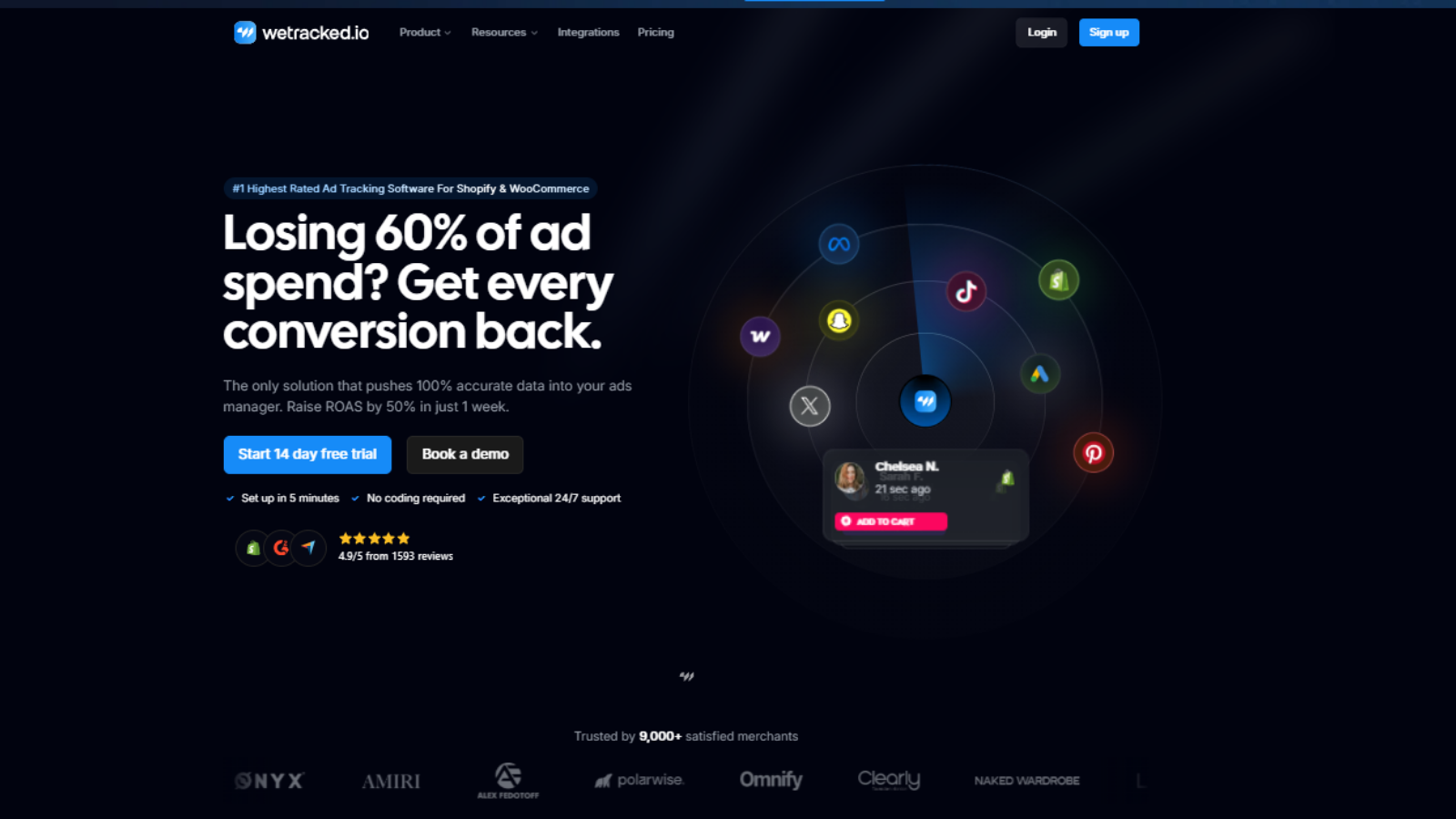
WeTracked is a server-side tracking and attribution platform built for Shopify and WooCommerce stores running paid media on Meta, TikTok, Google, and other ad networks. It sits between your store and your ad accounts, capturing events on the server and pushing cleaner conversion signals back into each platform's reporting and optimization layer.
The tool exists because browser-based pixels alone no longer capture a full view of ecommerce conversions. Between iOS privacy changes, ad blockers, cookie restrictions, and Safari's intelligent tracking prevention, a meaningful share of purchases never reach Meta or Google as matched events. WeTracked's role is to recover those signals through a server-side workflow and route them back into ad managers using each platform's official conversion APIs.
In practice, most teams use WeTracked for three things: improving Meta Conversions API event quality, tightening attribution between Shopify orders and ad spend, and getting a more reliable picture of ROAS than what the ad platforms report on their own.
Our testing experience
Our editorial team used WeTracked across roughly three weeks of hands-on testing on a live Shopify store running active Meta and TikTok campaigns. The goal was to evaluate the workflow a typical paid media operator would actually run: connecting the store, configuring server-side events, and comparing reported conversions against backend Shopify orders.
Onboarding and Shopify setup
The Shopify integration is the cleanest part of the onboarding. Installing the app and connecting the store took only a few minutes, and event mapping for standard ecommerce actions — view content, add to cart, initiate checkout, purchase — was already pre-configured. For operators without a developer on hand, this matters: the friction of setting up server-side tracking has historically been the biggest barrier to adoption.
Meta Conversions API integration
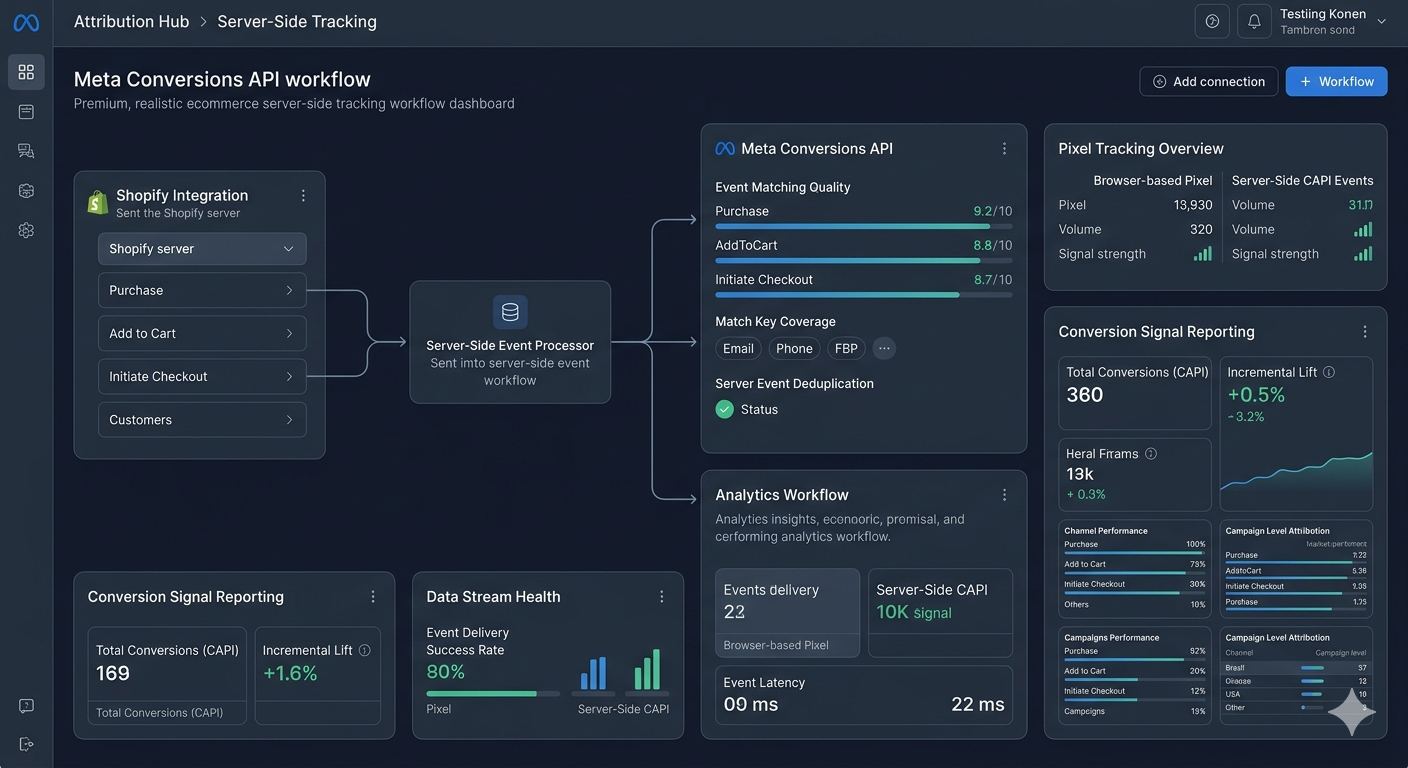
Connecting the Meta integration was straightforward. Once configured, WeTracked began routing server-side events into the CAPI within hours, and event match quality scores in Meta's Events Manager improved noticeably compared to the browser-only baseline. The lift was strongest on Purchase and Initiate Checkout events, which is consistent with what most stores see when adding a server-side layer.
Dashboard usability
The dashboard is operationally focused rather than visually flashy. Metrics are organized around what a paid media buyer actually checks daily: matched conversions, signal strength per channel, event delivery health, and attribution breakdown by campaign. There is less of the "executive summary" styling found in broader analytics suites, and more of a workbench feel — which we generally prefer for a tool used inside an ad ops workflow.
Attribution visibility
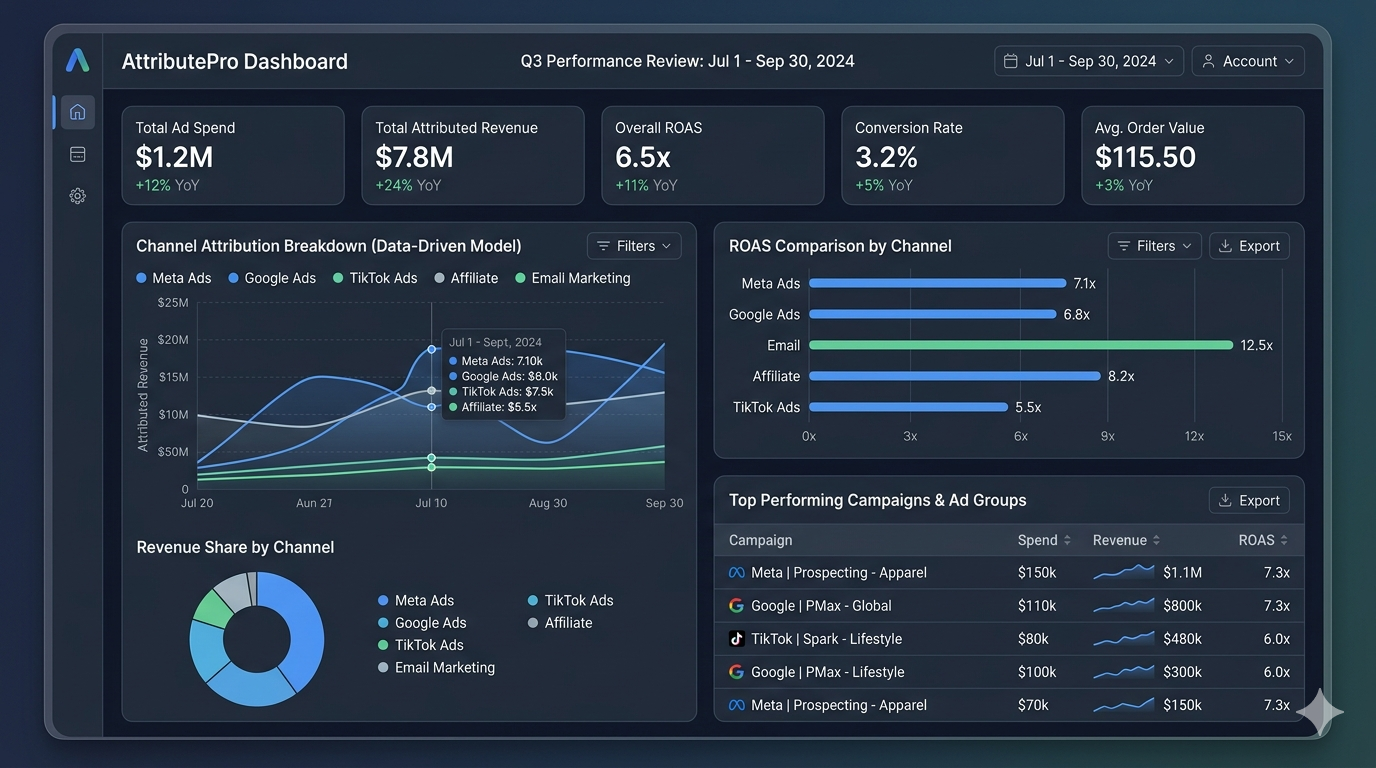
Attribution reporting is where WeTracked starts to differentiate itself from in-platform analytics. Because the platform is reconciling server-side events against Shopify order data, the conversion counts shown are closer to backend reality than what either Meta or TikTok report on their own. Channel attribution is presented across data-driven and last-click models, which is useful for operators running attribution comparisons rather than relying on a single model.
Where it still feels limited
WeTracked is purpose-built for ecommerce attribution, not full-stack analytics. If you need cohort analysis, LTV modeling, marketing mix modeling, or deep customer journey reporting, the platform is intentionally narrow. The reporting UI also assumes some familiarity with attribution concepts — operators new to server-side tracking may want to spend time in the documentation before configuring custom event mappings.
“Server-side tracking won't invent conversions that didn't happen. What it does is stop you from quietly losing the ones that already did.”
Key features
Server-side tracking
Captures conversion events on the server and routes them through official APIs to bypass browser-side signal loss.
Shopify & WooCommerce integration
Native app installs with pre-configured ecommerce event mapping for view, add-to-cart, checkout, and purchase.
Meta Conversions API
Direct CAPI integration with deduplication against the browser pixel and improved event match quality scores.
Attribution dashboards
Channel-level reporting with multiple attribution models, reconciled against Shopify backend orders.
ROAS reporting
ROAS, conversion volume, and incremental lift broken down by channel, campaign, and ad group.
Event matching & deduplication
Server and browser events deduplicated using event IDs, with match-key coverage on email, phone, and FBP.
Pricing overview
WeTracked uses a tiered subscription model, typically structured around monthly tracked events or store revenue volume. Entry-level plans are designed for smaller Shopify stores that need a working server-side layer without enterprise complexity. Mid-tier plans are aimed at scaling brands with multi-channel ad spend, while higher tiers add team seats, additional integrations, and higher event volume.
Pricing is broadly in line with comparable attribution and server-side tracking platforms in the ecommerce category. It is not the cheapest option — manual GTM Server Side setups can be lower in software cost — but those alternatives carry significant engineering overhead that WeTracked eliminates by handling configuration as a managed product.
For current pricing details, refer to WeTracked's official website. Plans and event limits change as the product evolves.
Who should use WeTracked?
Shopify stores
Useful for any Shopify store running meaningful ad spend on Meta or TikTok where browser-only tracking is leaving conversions unmatched.
Paid media buyers
Valuable for operators who need consistent attribution between ad platform reporting and backend orders to make spend decisions.
Ecommerce agencies
Helpful as a standardized server-side layer across client accounts, reducing per-client engineering work.
Scaling DTC brands
A reasonable fit for brands past the early stage who need cleaner attribution to make confident scaling decisions.
Attribution-focused operators
Suited to teams already thinking in terms of match rates, deduplication, and conversion API health.
Smaller stores at low spend
Less essential if monthly ad spend is small enough that signal-quality improvements won't move planning decisions.
Pros and cons
What we liked
- Clean Shopify integration with minimal setup overhead.
- Noticeable improvement in Meta event match quality.
- Operationally focused dashboard built for paid media buyers.
- Attribution reconciled against backend Shopify orders.
- Deduplication and event ID handling work without manual config.
Where it falls short
- Not a full-stack analytics suite — narrower than Triple Whale or Northbeam.
- Reporting UI assumes familiarity with attribution concepts.
- No built-in LTV, cohort, or marketing mix modeling.
- Less essential for stores with very small ad spend.
- Pricing scales with event volume rather than flat tiers.
Alternatives worth considering
WeTracked sits in a competitive category. Depending on what you actually need from an attribution stack, a few other tools are worth evaluating alongside it:
- Triple Whale — Broader ecommerce analytics suite with strong dashboards and creative reporting. Heavier than WeTracked if your primary need is signal quality, not full-stack analytics.
- Northbeam — Attribution platform aimed at larger DTC brands, with marketing mix modeling and multi-touch reporting. Higher price point and more configuration depth.
- Hyros — Long-standing tracking platform with a focus on ad-led attribution. Stronger pedigree in info-product and high-spend accounts than in mainstream Shopify.
- Elevar — Server-side tag management built around GTM Server Side, popular with technical ecommerce teams. More flexible, but requires more hands-on configuration.
For deeper context on the category, see our editorial guide to server-side tracking for Shopify and our breakdown of WeTracked vs Triple Whale.
Frequently asked questions
What is WeTracked used for?+
WeTracked is used to improve the accuracy of conversion tracking and attribution for ecommerce stores running paid ads. It captures events on the server side, deduplicates them against the browser pixel, and pushes cleaner data into platforms like Meta and TikTok via their official conversion APIs. The end result is a more accurate picture of which campaigns are actually driving revenue.
How does WeTracked integrate with Shopify?+
WeTracked installs as a Shopify app and pre-configures the standard ecommerce event mapping — view content, add to cart, initiate checkout, and purchase — without requiring custom code. Most stores can complete the connection in under fifteen minutes. Custom events and additional parameters can be configured later from the dashboard.
Does WeTracked replace the Meta Pixel?+
No. WeTracked runs alongside the Meta Pixel and uses event IDs to deduplicate matching events between the browser and server side. The pixel still fires for users who allow it; WeTracked fills the gap for users where browser-side tracking is blocked, restricted, or fails to deliver. The two layers are designed to work together, not as substitutes.
Will WeTracked actually improve my ROAS?+
WeTracked does not generate new conversions — it improves the accuracy of the conversions you are already getting. In most testing we observed, the practical impact is twofold: ad platforms see more matched events and can optimize campaigns more effectively, and operators get a clearer view of true ROAS. Whether that translates to better business outcomes depends on how those signals are used, not the tool alone.
Is WeTracked worth the price for smaller stores?+
For stores with small monthly ad spend, the return on a dedicated attribution platform is limited — the absolute revenue at stake is often below the threshold where signal-quality improvements meaningfully change spend decisions. WeTracked tends to make more sense once paid spend is consistent enough that attribution clarity affects scaling choices.
How is WeTracked different from GTM Server Side?+
Google Tag Manager Server Side is a flexible foundation for building server-side tracking yourself. WeTracked is a managed product built on similar principles, but with ecommerce-specific event mapping, prebuilt integrations, and an attribution dashboard included. The trade-off is the usual one: more flexibility with GTM SS, less engineering overhead with WeTracked.
Final verdict
For Shopify brands struggling with attribution visibility after iOS tracking changes, WeTracked offers a cleaner and more operationally focused workflow than many broader analytics platforms. It does one thing well: recover conversion signals server-side, deduplicate them properly, and feed them back into ad platforms in a form they can actually use.
The product is intentionally narrower than full-stack analytics suites, which we view as a strength — the dashboard, integrations, and reporting all stay close to what a paid media operator runs day to day. For teams that need cohort analysis, LTV modeling, or marketing mix modeling, a broader platform will likely sit alongside it rather than be replaced by it.
As with any attribution tool, the right answer depends on your stack and your spend. We recommend evaluating WeTracked against the alternatives on a real store with real ad volume — signal-quality improvements are easier to verify in practice than to argue about in theory.
Continue your research on WeTracked
For the most current information on features, pricing, integrations, and event limits, refer to WeTracked's official website. This review reflects our hands-on testing at the time of publication.
View Official Website