
Best Product Research Tools for Ecommerce in 2025
A realistic, software-focused comparison of the leading product research and adspy platforms used by Shopify brands, dropshippers, and ecommerce agencies — including WinningHunter, Minea, PiPiADS, AdSpy, and Dropispy.
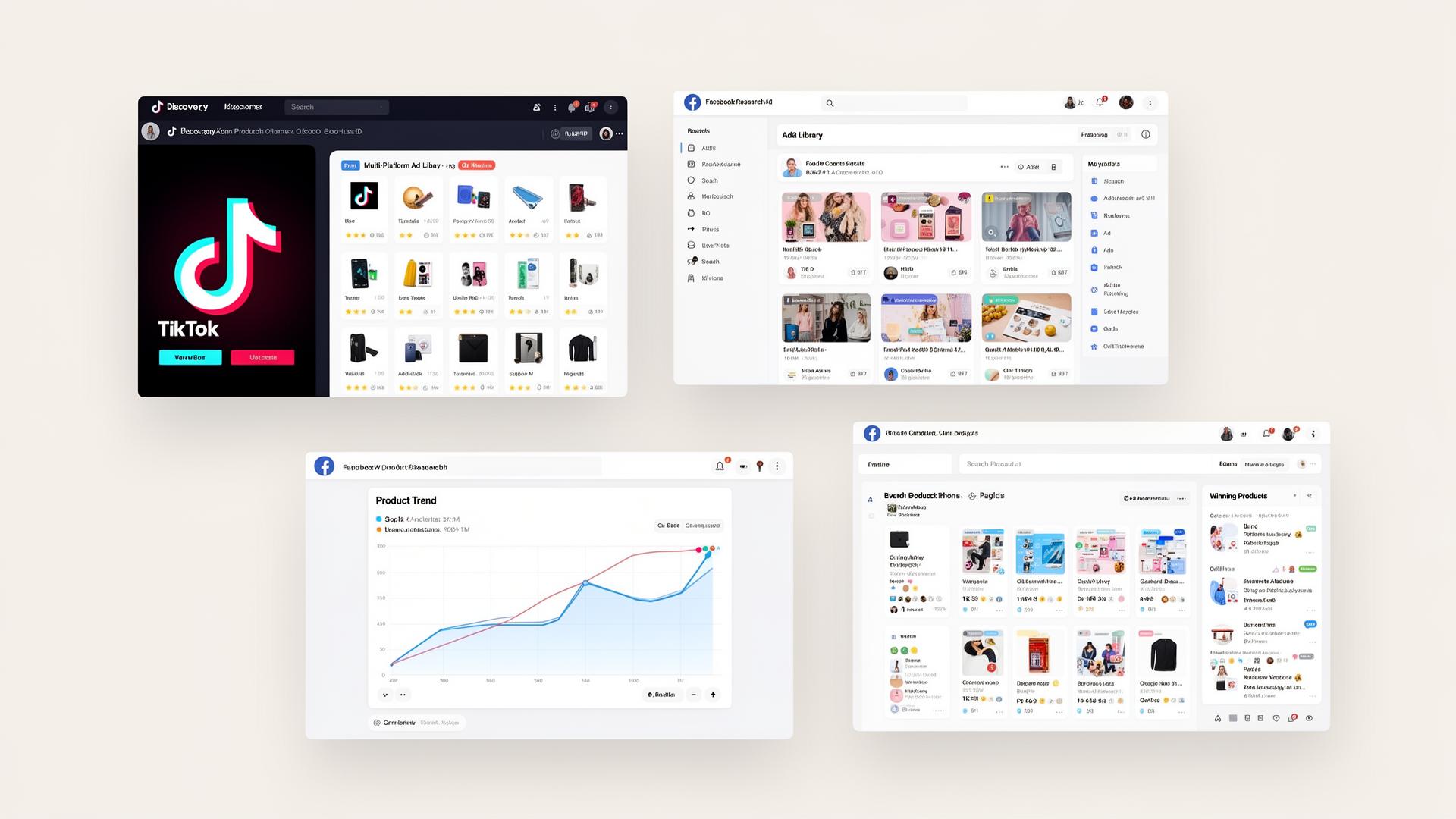
Modern ecommerce product research now relies far more on ad visibility, trend analysis, and creative intelligence than simple product scraping. The brands and operators who used to spend hours sifting through AliExpress order counts have largely moved on. The signal that actually matters today lives inside ad libraries — what creators are running, how long it has been live, which Shopify stores are scaling on the back of it, and what the creative format looks like.
Different product research platforms focus on different workflows. Some specialize in TikTok adspy, others in long-form Facebook ad history, and a few try to combine multiple ad networks with their own product analytics layer. None of them are universally "best." We tested several of the most commonly adopted platforms across realistic Shopify and dropshipping workflows to understand where each one genuinely fits.
This guide is intentionally editorial. It avoids ranked "winners," affiliate redirects, and any framing that suggests a single tool will hand you a viral product. The goal is simpler: explain what each platform is actually built for, where the workflow fits, and what the realistic limitations are.
Quick comparison of the platforms
The table below summarizes how each tool tends to be positioned in practice. Pricing is approximate and changes frequently — verify directly with the vendor before committing.
| Tool | Best For | Workflow Type | TikTok Focus | Ease of Use | Starting Pricing |
|---|---|---|---|---|---|
| WinningHunter | Lightweight TikTok adspy | Ad discovery + Shopify research | Strong | Easy | ~$49/mo |
| Minea | Multi-platform ad intelligence | Cross-network ad library | Moderate | Moderate | ~$49/mo |
| PiPiADS | Pure TikTok adspy | Short-form creative discovery | Very strong | Moderate | ~$77/mo |
| AdSpy | Historical Facebook ad research | Long-form ad intelligence | Limited | Moderate | ~$149/mo |
| Dropispy | Entry-level trend discovery | Lightweight product analysis | Limited | Easy | Free / ~$30/mo |
None of these tools are interchangeable. A team that lives in TikTok will evaluate them very differently from one that runs a mature Meta-heavy account.
How we evaluated these tools
Product research software is unusually easy to oversell. A nice-looking ad library doesn't mean the underlying data is fresh, complete, or relevant to the markets you actually sell in. Our evaluation focused on the day-to-day workflow of a real ecommerce operator rather than feature checklists.
- TikTok ad visibility. How quickly new ads surface, how broad the regional coverage feels, and whether the creative previews load reliably.
- Product filtering quality. Whether filters genuinely narrow results or just move noise around.
- Ecommerce workflow fit. How naturally a researcher can move from "interesting ad" to "interesting product" to "interesting store."
- Trend analysis. Whether trend signals are backed by usable data or feel cosmetic.
- Shopify research usability. Visibility into store themes, apps, and product catalogs without leaving the tool.
- Adspy depth. Historical reach, filter granularity, and honest disclosure of what is and isn't indexed.
- Dashboard usability. Whether the interface is opinionated and fast, or sprawling and hard to navigate.
- Operational simplicity. How long it takes a new team member to become genuinely productive.
Best product research tools, reviewed
WinningHunter
TikTok adspy and Shopify-focused product research
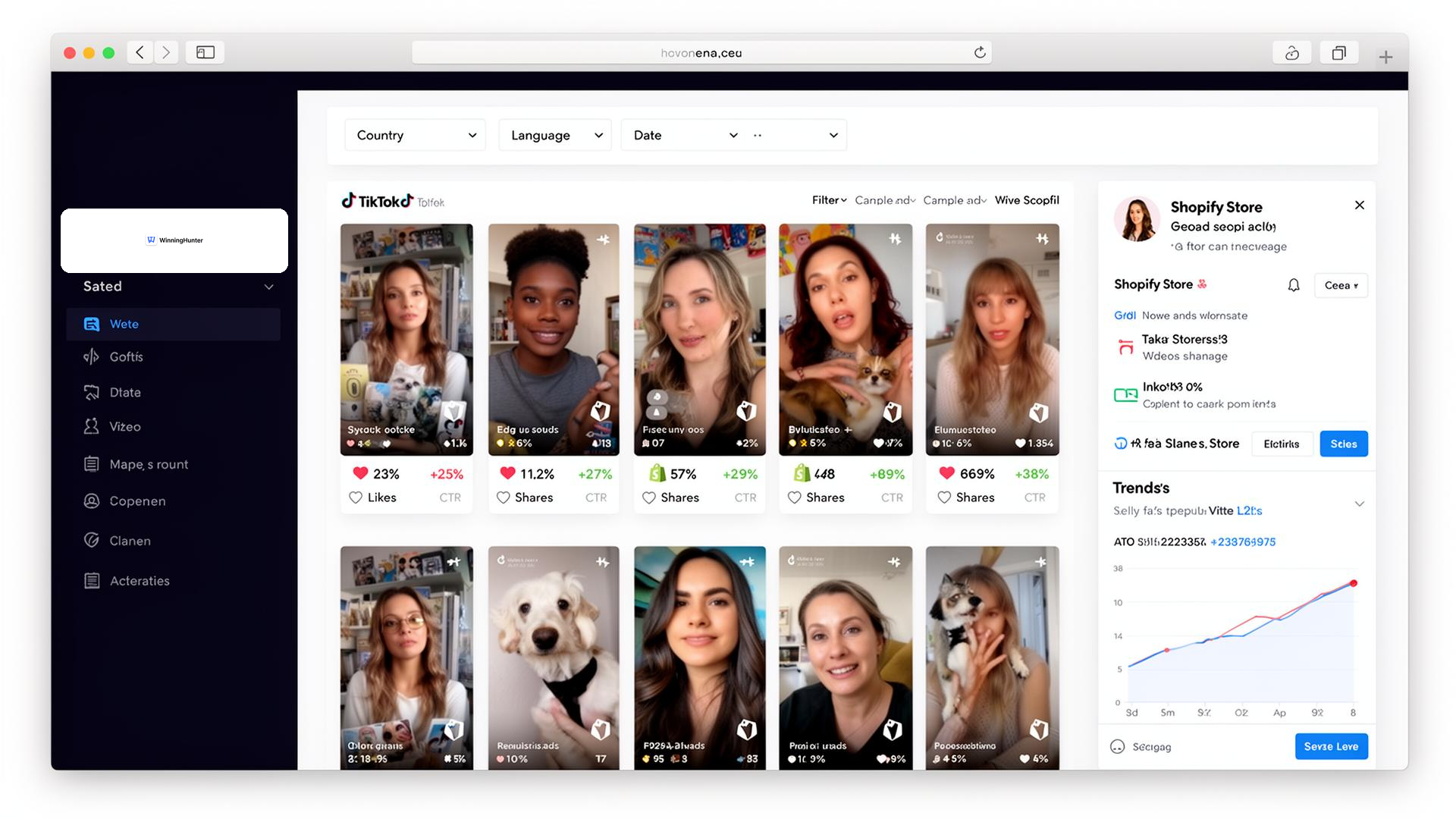
WinningHunter is built around a fairly narrow workflow: discover a TikTok ad, understand the product behind it, and pull up the Shopify store running it. The interface leans heavily into vertical ad previews with engagement metrics surfaced directly on the card, which makes scrolling through new creatives feel closer to browsing TikTok than navigating a traditional ad library.
For dropshippers and Shopify operators who care primarily about short-form TikTok creative, the tool's opinionated structure is its main advantage. There's less to configure, fewer settings to learn, and the jump from creative discovery to a Shopify product page is intentionally short. Teams used to heavier platforms occasionally find it too opinionated, but the trade-off is operational speed.
Strengths
- Fast TikTok-first ad discovery interface
- Direct visibility into Shopify stores behind ads
- Simple onboarding — productive within a session
- Clean engagement metrics on each ad card
- Lightweight pricing relative to enterprise adspy tools
Limitations
- Less depth on Facebook and Pinterest networks
- Smaller historical archive than long-running competitors
- Limited advanced filtering for niche segmentation
For a deeper review of the platform, see our WinningHunter overview or the WinningHunter alternatives breakdown.
Minea
Multi-platform ad intelligence across Facebook, TikTok, and more
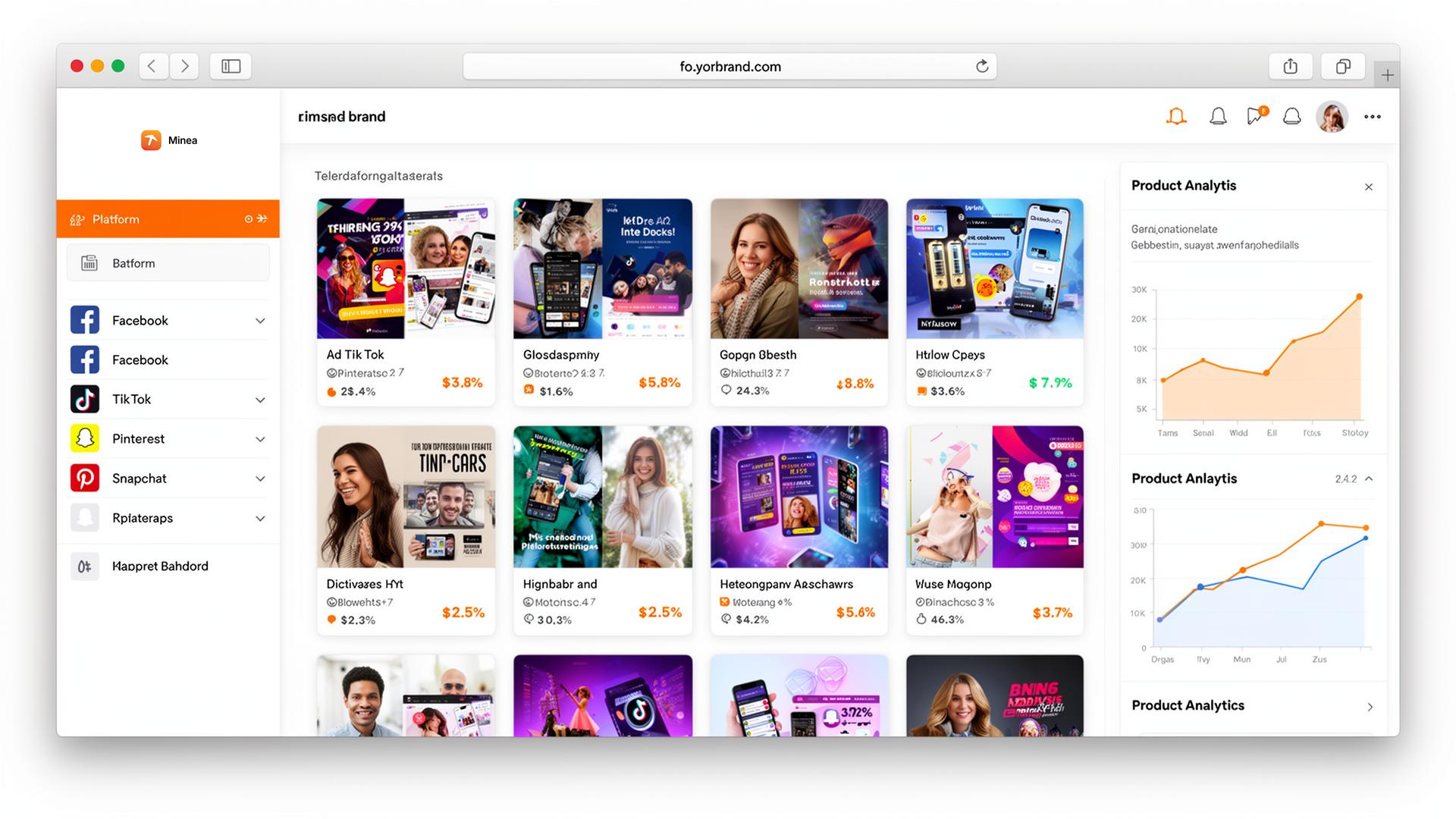
Minea takes a deliberately broader approach. Instead of optimizing for a single network, it pulls ad creative from Facebook, TikTok, Pinterest, and Snapchat into a unified library, with product analytics layered on top. For teams researching across multiple channels — or trying to understand how a winning concept travels between networks — the cross-platform view is genuinely useful.
The trade-off is that Minea's TikTok depth doesn't match a TikTok-pure tool, and the Facebook archive isn't quite as deep as AdSpy's. It's a workhorse for ecommerce researchers who want one window into several networks rather than the deepest possible view of any single one.
Strengths
- Cross-network coverage (Facebook, TikTok, Pinterest, Snapchat)
- Built-in product analytics for shortlisted items
- Useful for agencies handling several brands at once
- Reasonable starter pricing for the breadth of coverage
Limitations
- Less TikTok depth than dedicated TikTok adspy tools
- Interface can feel dense on first contact
- Filter relevance varies by network

PiPiADS
Dedicated TikTok adspy and short-form creative discovery
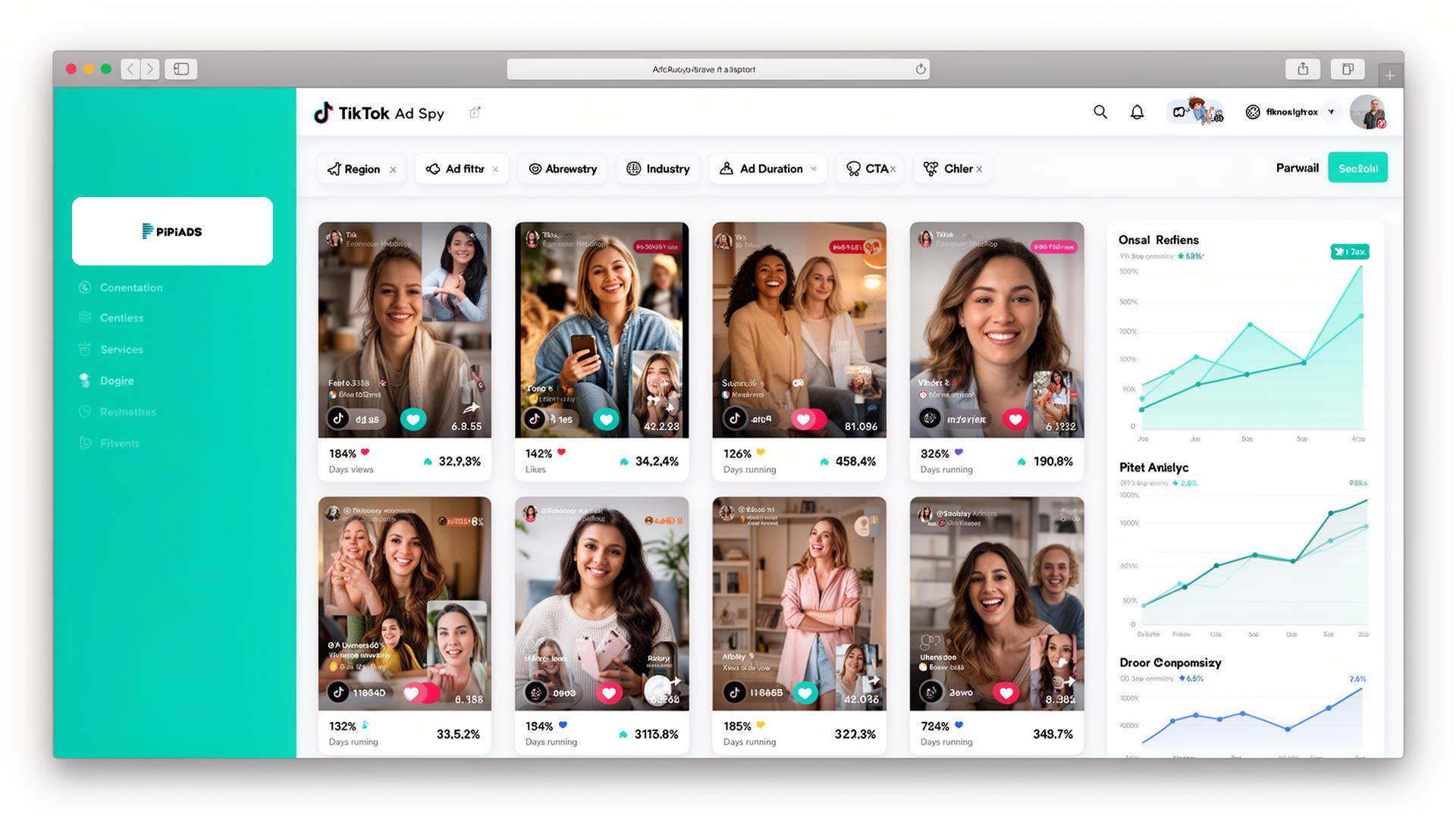
PiPiADS is one of the most TikTok-specific tools on the market. The entire product is built around the assumption that the user lives inside short-form video discovery: filters for region, industry, ad duration, CTA type, and days running are surfaced front-and-center, and the creative previews are large enough to actually evaluate without expanding every card.
The platform tends to be popular with creative strategists studying ad hooks, pacing, and CTAs rather than with operators who only care about the product itself. If you treat TikTok as your primary growth channel, PiPiADS is hard to ignore. If TikTok is one of five channels you care about, a multi-platform tool will probably feel more efficient.
Strengths
- Deep TikTok ad coverage across regions
- Granular filters tuned for short-form creative
- Strong creative analytics for hook and pacing analysis
- Useful for studying winning ad structures over time
Limitations
- TikTok-only focus — no Meta or Pinterest data
- UI requires a short learning period
- Pricing is on the higher end for solo operators
AdSpy
Historical Facebook ad research and intelligence
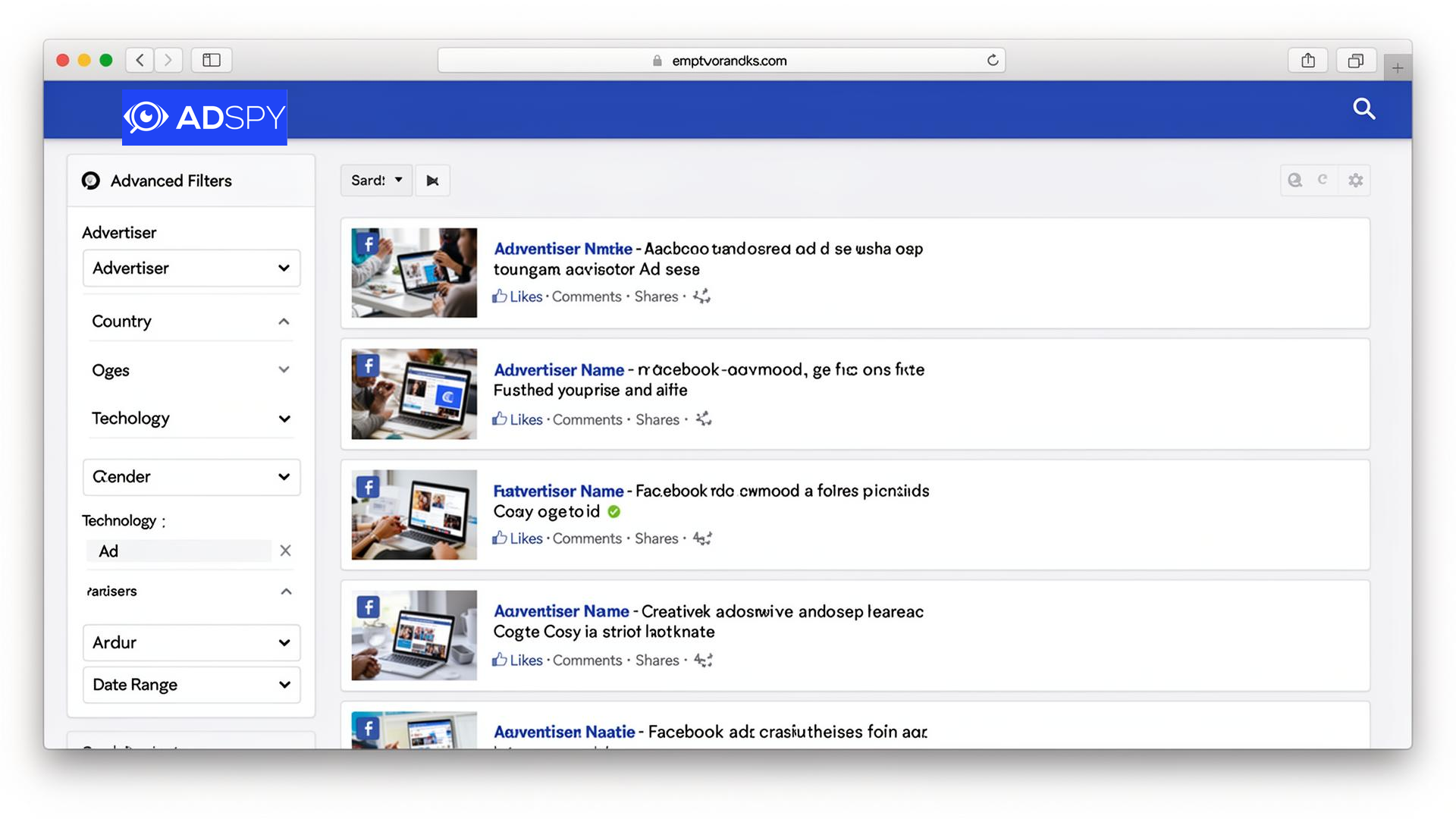
AdSpy has been part of the ecommerce research stack for years, and its strength is the depth of its historical Facebook archive. The filtering system — advertiser, country, age, gender, technology, date range — is more granular than most competitors, which makes it useful for researchers who need to look backwards rather than only at what is running this week.
It's not a TikTok tool, and it doesn't pretend to be. Where it shines is long-form analysis: tracking how a brand's creative evolves over months, identifying durable angles, and pulling examples for ad strategy reviews. The pricing reflects that positioning — it's mostly used by agencies and more mature ecommerce teams.
Strengths
- Deep, long-running Facebook ad archive
- Granular filters for advertiser, geography, and tech stack
- Strong fit for agencies and creative strategists
- Useful for retrospective competitor analysis
Limitations
- Limited TikTok coverage
- Higher entry price than most TikTok-first tools
- Interface feels dated compared to newer adspy platforms
Dropispy
Entry-level ecommerce trend discovery and product analysis
Dropispy occupies the lighter end of the market. The free tier is genuinely usable for early-stage research, and the paid plans remain affordable compared to most competitors. The interface is built around quick browsing rather than deep analytics — closer to a curated product and ad feed than a full intelligence platform.
For new operators trying to learn what categories are moving and how winning ads tend to be structured, it's a reasonable starting point. Mature teams typically outgrow it once their workflow demands more targeted filters, fresher data, or proper TikTok coverage.
Strengths
- Accessible free tier for early research
- Simple UI with a low learning curve
- Useful for browsing trending product categories
- Affordable for solo operators
Limitations
- Limited filtering depth
- Smaller archive than premium adspy tools
- Not a serious TikTok adspy alternative
The right product research tool isn't the one with the most ads. It's the one that fits how your team actually moves from a creative signal to a tested product.
Which tool is best for Shopify sellers?
Beginners
Dropispy and WinningHunter are the gentlest entry points. Both prioritize browsing speed over advanced configuration.
Dropshippers
WinningHunter and PiPiADS map closely to how dropshippers actually research — fast TikTok creative loops with quick Shopify cross-checks.
Established Shopify brands
Minea is often the better fit when research spans multiple ad networks and creative direction needs to be informed by more than just TikTok.
TikTok-first advertisers
PiPiADS' filter granularity and creative depth make it the natural pick for teams whose paid media is dominated by TikTok.
Agencies
AdSpy and Minea typically anchor agency workflows, where historical depth and cross-network breadth matter more than absolute simplicity.
Product research teams
A combination almost always wins: one TikTok-first tool plus one broader ad intelligence platform usually outperforms any single solution.
Common limitations of product research tools
Adspy platforms are extremely useful, but they aren't magic. Treating their output as a finished verdict rather than a starting point is one of the most common mistakes ecommerce teams make. A few patterns worth keeping in mind:
- Trend saturation. By the time a product appears across multiple adspy tools, the easy upside is often gone. The signal is real, but the window is rarely as wide as the dashboards suggest.
- Misleading metrics. Likes, shares, and "days running" are useful but not synonymous with profit. Many ads run for weeks at a loss before being killed.
- Delayed ad visibility. No platform indexes every ad in real time. The most interesting creatives sometimes surface after the brand behind them has already scaled.
- Product repetition. The same handful of categories tends to dominate every adspy feed. Differentiation comes from the angle, not the SKU.
- False-positive trends. A spike in ad activity can reflect a single advertiser flooding a network, not a true trend.
- Workflow limitations. Even the best research tool only tells you what already worked for someone else. The harder work — your creative, your offer, your landing page — still falls on the team.
Frequently asked questions
Choosing the right product research tool
For ecommerce operators prioritizing lightweight TikTok ad discovery and fast operational workflows, tools like WinningHunter feel easier to navigate. Teams needing broader ad intelligence and multi-platform visibility may lean more toward platforms like Minea or AdSpy, while TikTok-first creative strategists often gravitate to PiPiADS for its filter depth.
The realistic answer is that most serious teams end up using two platforms: one optimized for fast TikTok-first discovery, and one broader tool for cross-network and historical research. Dropispy can sit alongside either as a low-friction entry point. Whatever combination you settle on, the meaningful work still lives in the testing process — the tool is the search, not the decision.
For a deeper look at how these workflows fit into a full dropshipping process, see our guide to finding winning products for dropshipping.